


Before you drop me hateful comments. Please understand. There is no doubt in my mind that Donald Trump sexually abused minors throughout his life. I am certain that Donald Trump and his co-conspirators engaged in even worse conduct than that. But know, there are appropriate ways to work with victims and present their stories to the public. Lisa Noelle Voldeng’s blog is not one of them.
A series of explosive, yet highly questionable, allegations involving high-ranking political figures has surfaced on Voldeng’s Substack page "Outlaws of Chivalry." As expected, her politically charged posts have further divided MAGA loyalists from the left. Again, Donald Trump’s pattern of sexual abuse is now being punted between party lines. And Voldeng’s presentation of the allegations only plays into the division. How does that help victims?
Voldeng has no known professional license in therapy, medicine, or law. But she conducted a lengthy recorded interviews of Sascha Riley in July 2025 about him being sexually abused as a minor.
Riley (born 1973) alleges his adoptive parents trafficked him in the early 1980s into a child sex and snuff film ring led by Donald Trump. While the nature of the claims is grave, the lack of professional vetting and the background of the interviewer raise significant red flags regarding the reliability of his “testimony” and its potential impact on credible advocacy for victims.
Danger of Causing Serious Harm to Sexual Abuse Victims
When an unlicensed or untrained individual interviews a victim of sexual abuse, they risk causing profound harm that can span legal, psychological, and social dimensions.
An unlicensed person often lacks the training to navigate the neurobiology of trauma, which dictates how victims remember and process their experiences.
Throughout Voldeng’s interview of Riley, she engages in highly unethical and unprofessional discussions with Riley. Voldeng used leading questions to suggest what happened to Riley. She also fails to dispose of her political biases. She used charged language to describe her personal disdain for Trump.
Danger of Contaminating Evidence
Voldgeng’s suggestive questioning throughout the interview contaminates the evidence and could severely undermine Riley’s testimony in a legal proceeding.
Untrained individuals like Voldeng often ask leading questions to victims. This can plant false memories or cause victims to agree with the interviewer’s suggestions just to end the stress. Voldeng also elicited duplicative answers, which leads to inconsistencies. You have probably heard of the trial objection “asked and answered.” There’s a reason why your adversary cannot repeatedly ask you a question that was previously answered. It’s an improper technique that confuses the record and leds to inconsistencies.
Although Riley’s recorded interview is not verified testimony under penalty of perjury, and technically constitutes hearsay, his recorded statements can likely be used against him in legal proceedings. If Riley finds himself involved in legal proceedings and testifies, his adversaries can impeach him with the recordings by showing that he made a prior inconsistent statement—a common exception to the hearsay rule.
Moreover, leading questions are used in legal proceedings while cross-examining an adversary. There is no justification for Voldeng to essentially depose Riley, record it, and release it to the public. This places Riley in a risky position. No longer can he control the narrative.
As a lawyer, the last thing in the world I would want for any client is to have recorded interview of their allegations floating around. I do not record interviews with my clients, even though the recordings are protected from disclosure under the work product and attorney-client privileges.
As a lawyer who represents victims, I want to control and limit what evidence their adversaries have. I don’t want to create evidence and hand it to them on a platter.
The more someone speaks, the more evidence they provide, the more likely they are to make mistakes. That is normal. But defense attorneys can destroy a person’s credibility by pointing out slight inconsistencies.
Because trauma often results in fragmented or non-linear memory, an unlicensed person might push for a strict timeline that the victim’s brain cannot provide. This creates artificial inconsistencies—ones that defense counsel will use to destroy the victim in front of a jury.
The Recordings Expose Riley to Defamation Claims
While “the truth” is obviously a defense to defamation, it may be very difficult for Riley to prove his allegations are in fact true given that the alleged abuse occurred nearly four and a half decades ago.
I would never want to expose a client to being sued for defamation. Let alone by Donald Trump, Jim Jordan, Andy Biggs, Lindsey Graham, and Clarence Thomas. If they sue Riley for defamation per se, their burden is to show that he made statements accusing them of a serious crime; that those statements were published to a third party; and that third party understood the statements were about them.1 They are not required to prove they are innocent. A defamation case is not a criminal trial.
Once Trump and Co. present evidence that Riley and/or Voldeng published allegations that they had committed serious crimes, then Riley can attempt to defend against their claims by proving that Trump and Co. did in fact commit those crimes.And that’s where it gets difficult. It’s not easy to prove that someone was sexually abused in 1980-1983. It is difficult for victims to obtain relevant, admissible evidence of crimes that occurred so long ago.
When an individual files a police report or raises the allegations in a civil lawsuit, the the statements are typically exempt from defamation claims.2 But once the accuser publishes the allegations to third persons (outside the context of litigation), they risk being sued.
You may recall that Virginia Giuffre was very wise to keep most of her allegations within the context of litigation. But even then, that did not stop Alan Dershowitz from victim shaming her in the news.
As a result, Giuffre sued Alan Dershowitz for defamation in 2019.3 But he aggressively defended the lawsuit and countersued her for the same. Dershowitz’s legal team deployed scorched earth tactics for three years until both sides agreed to dismiss their claims against each other. Unfortunately, Giuffre never got to bring her claims against Dershowitz to trial.
That’s why if you are a victim, it is very important to have highly experienced therapists, physicians, and legal counsel in these situations. In these situations, we do not want the abuser to control the narrative, file a defamation lawsuit, or resort to other tactics that muddy the waters—tactics that give the abuser significant control and power.
Secondary Victimization
Asking a sexual abuse survivor to recall details can lead to retraumatization. When working with an abuse victim, you don’t want to have them relive the events without appropriate grounding techniques. Otherwise, you can easily trigger severe PTSD symptoms. I’m not here to diagnose Riley, but he even discloses that while he was in the Army and serving in the Iraq war, he came under heavy fire. He could have severe PTSD from the sexual abuse and serving in combat. Individuals with multiple sources of PTSD and be a high risk for experiencing panic attacks, dissociation, and even paralysis when triggered. Voldeng’s work here unnecessarily places Riley in a risky situation.
There’s also the risk when interviewing an abuse victim of inducing guilt and shame and loss of agency. In these situations, an interviewer can unintentionally dictate the flow of the conversation and divest the victim of their power. This could further harm the victim.
Ethical Risks
In this situation, Voldeng broadcasted Riley’s allegations in a very sensational way on her blog. What’s her plan now? She has alerted the alleged perpetrators. If Riley’s allegations are true, he’s immediately as risk of physical harm and continued intimidation. It’s interesting that the conclusion of Voldeng’s blog post explains that she reported all of his allegations to her “allies,” church officials, and police. And that when the FBI contacted Riley, she removed him from the “country.” Is that a good plan? Why expose a victim to all this. Voldeng’s credibility is weakened by the fact that she uses highly charged descriptions of Trump throughout her interview and on her blog.
Voldeng’s Lack of Credentials and Monetization
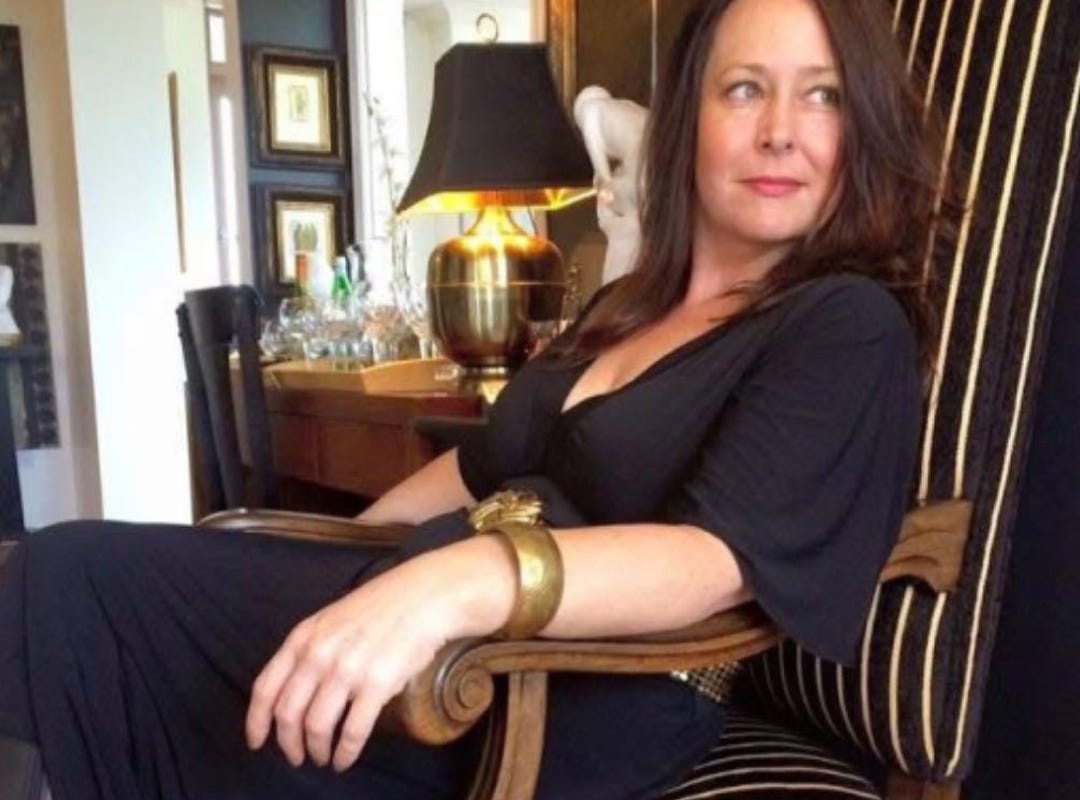
Voldeng possesses no apparent license to practice therapy, nor any documented professional experience in investigative journalism or forensic interviewing.
On her personal website, Voldeng describes herself as an investor in “individuals and companies involved in the pursuit of justice,” alongside interests in “advanced technology, finance, and content companies.”
The distribution of these interviews has a clear commercial component. Voldeng’s Substack charges $350 for an annual membership and offers a “founding member” tier for $2,500. For this price, subscribers receive “fireside-esque conversations on living chivalrously” and “remote training sessions on practical preparedness.”

The use of a paywalled blog to prosecute individuals for alleged sexual abuse is bizarre and could place victims in significant harms ways.
Voldeng also has a website Voldeng.com where she has a portfolio section that showcases several of her “companies and brands” and “apparel, books, handbooks, paintings, photography, music, mixed media, multi markets.”
Voldeng wrote that she published the audio recordings of Riley for herself and for Sascha “[a]nd for his friends Samantha, Patricia, and Sarah, all of whom died.”
Dangers of Blindly Accepting Riley’s Allegations as Truth
I have received a lot of flak from my last article where I discussed what I believe are some of the exaggerations in Riley’s recorded statements. Unfortunately, it is important to vet Riley’s allegations before blindly supporting him.
I understand the urge to believe everything that is thrown out there. And I know there are many victims of Donald Trump. But I think it is dangerous for us to automatically confirm and get behind any allegation without first carefully vetting each claim with corroborating evidence.
Otherwise, we are doing injustice to the other victims whose claims we already have substantial, reliable, and credible evidence of.
According to The New York Times columnist Jessica Bennett, as many as 69 women have accused Trump of sexual abuse.4
In 1990, Donald Trump’s ex-wife Ivana Trump testified in a deposition, under penalty of perjury, that when he found out she had visited a plastic surgeon, he was angry, assaulted her, battered her, ripped out hair, and raped her.5
In 1997, Jill Harth filed a lawsuit against Trump alleging he had sexually assaulted her at Mar-a-Lago in Ivanaka Trump’s bedroom and later stalked her. The case settled for an undisclosed amount.
In 2016, an anonymous woman using the pseudonym Katie Johnson filed a lawsuit in California accusing Trump and Jeffrey Epstein of forcibly raping her in 1994, when she was 13 years old. Her lawsuit also alleged that Trump had threatened her, that if she ever told anyone, he would make her disappear like he did to her friend Maria, a 12 year old. The lawsuit was dropped immediately before election day in 2016.
In 2023, a federal jury found that Trump had assaulted, battered, and forcibly penetrated E. Jean Carroll.6
Many other women have publicly alleged they were sexually abused by Donald Trump, including Jessica Leeds, Kristin Anderson, Stacey Williams, Beatrice Keul, Lisa Boyne, Cathy Heller, Temple Taggart McDowell, Amy Dorris, Karena Virginia, Karen Johnson, Mindy McGillivray, Rachel Crooks, Natasha Stoynoff, Juliet Huddy, Jessica Drake, Ninni Laaksonen, Cassandra Searles, Mariah Billado, Bridget Sullivan, Tasha Dixon, and Samantha Holvey. This is not intended to be an exhaustive list. Each of these women have highly credible allegations that have been vetted.
But blindly adopting Sascha Riley’s allegations, who has no known connection, contact, access, or relationship to Donald Trump, Jeffrey Epstein, Clarence Thomas, Jim Jordan, Andy Biggs, or Lindsey Graham, is not good for anyone. Riley is an outlier.
The problem I have with Riley’s allegations is that they often clash with established historical timelines. That’s not to say that his allegations are false. But he admittedly has difficulties recalling certain information. That’s normal. It does not mean he is lying.
Anachronisms and Logical Inconsistencies
Here are some of the inconsistencies in his allegations. As a recap, Riley alleges he was trafficked to a snuff ring led by Donald Trump in the early-to-mid 1980s—a ring he claims included Jeffrey Epstein, Andy Biggs, Jim Jordan, Lindsey Graham, and Clarence Thomas.
Critically, the claims include several historical improbabilities:
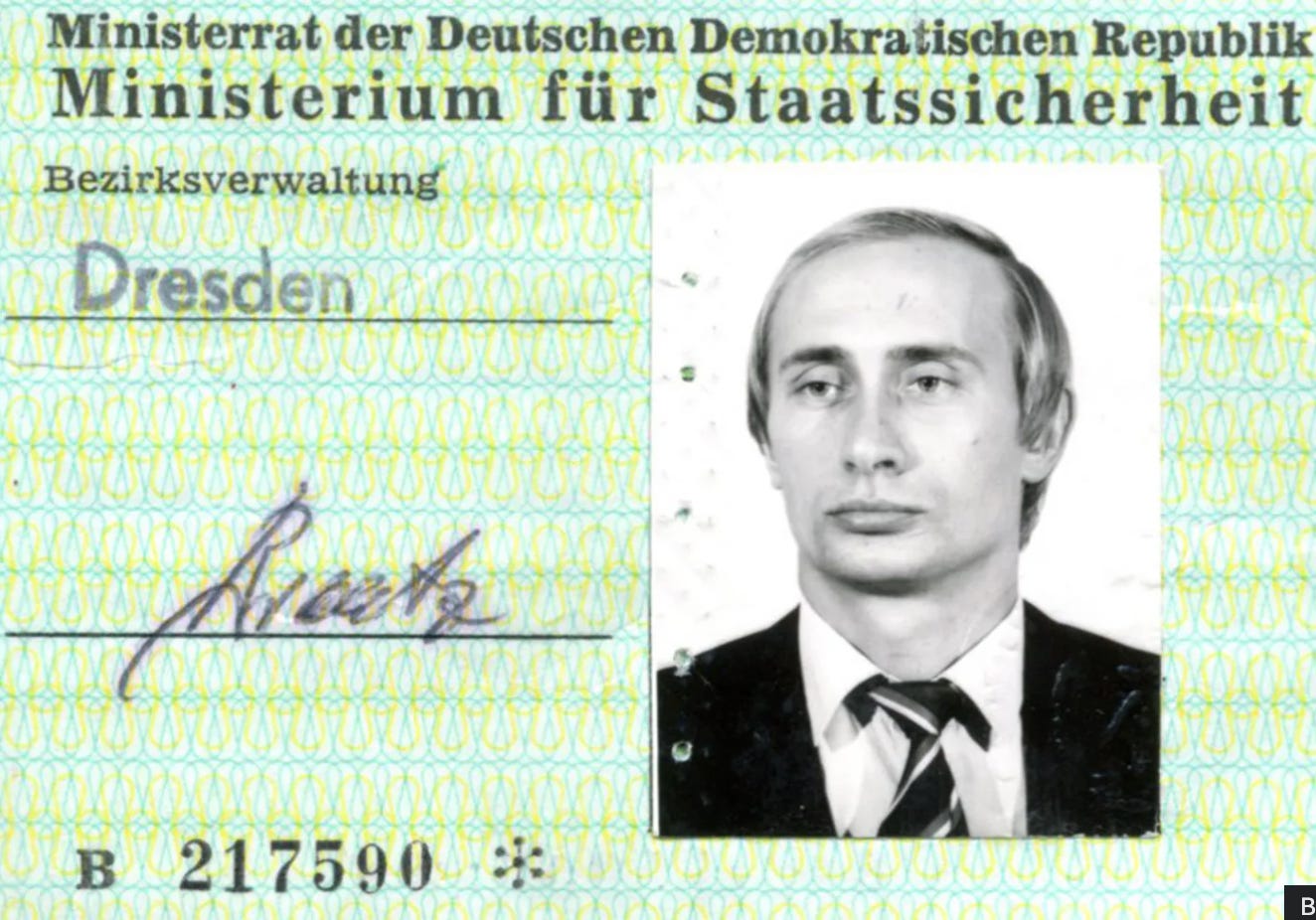
The Putin Connection: Riley claims Vladimir Putin’s name was frequently mentioned by his adoptive parents during the 1980-1983 incidents. First of all, Putin has very limited English speaking skills. It’s not probably that he would be “hanging out” in the social circles of Sascha Riley’s father William Kyle Riley. At the time, Putin was a low-ranking KGB official in East Germany; he remained virtually unknown in the United States until his rise to power in 1999. There are no verified records of Putin ever visiting the United States in the early 1980s. During that time period, Putin was serving in Leningrad at the First Department as a counterintelligence agent. Putin was tasked with monitoring foreign officials—not recruiting Westerners. In the past, both Riley and Voldeng posted politically charged statements and rhetoric about Trump, Russia, and Putin.
The Jim Jordan Timeline: Riley alleges Jim Jordan was a participant in the ring. However, in the early 1980’s Jordan was attending Graham High School in Ohio. By 1982, he started attending University of Wisconsin-Madison, where he was a three-time All American and Two Time NCAA Division I wrestling champion. Riley alleges he was forced to fight Jordan in front of a group of people. At the time, Riley would have been approximately 10 years old while Jordan was 19.
“So he assaulted me in front of a crowd, and I think that it was filmed, but I can’t swear that it was filmed, but it was in front of those 25 or 50 people. . . The reason that I remember Jim Jordan is first he stood out because he wasn’t that much,
he’s only like seven or eight years older than me.” Riley alleged.

Trump’s relationship with Epstein
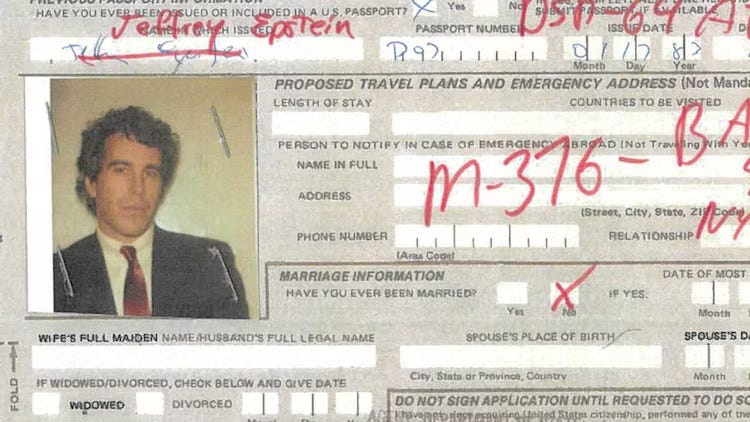
Riley alleges that Trump ran the child sex-trafficking and snuff film ring. Whereas Jeffrey Epstein played a lower function in the ring. The difficulty with these allegations is that there is no known association between Donald Trump and Epstein during the early 1980s. There is little evidence of Trump having any connection to Epstein until at least the late 1980s. According to Trump, he met Epstein in 1987. That’s not to say that Trump and Epstein did not know each other in the early 1980s, but if they did, and you have evidence of that, please send it to me. Investigative journalists have sought out information about the foundations of Trump’s relationship with Epstein for more than a decade.
Kicking a Wooden Stake in Donald Trump
One specific account involves Riley allegedly causing a life-threatening injury to Donald Trump using a wooden tent stake—an incident Riley claims resulted in Trump being “life-flighted” out of a barn in Enterprise, Alabama.
There is no public record of such a medical emergency or injury. There is chatter that the anal injuries line up with the fact that Donald Trump’s personal physician was gastroenterologist Harold Bornstein. Bornstein claimed his office and records were raided by Trump’s people when Trump became president. Bornstein died in 2021. There are also rumors that Trump wears diapers and stinks out his staff. People who have adopted Riley’s allegations contend that these rumors information somehow proves that Riley impaled Trump in the early 1980s.
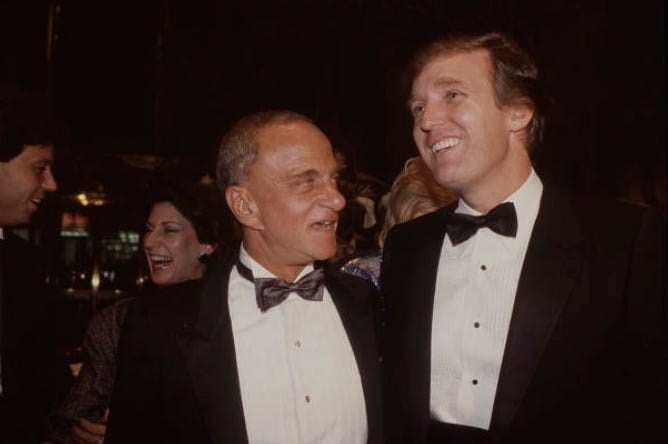
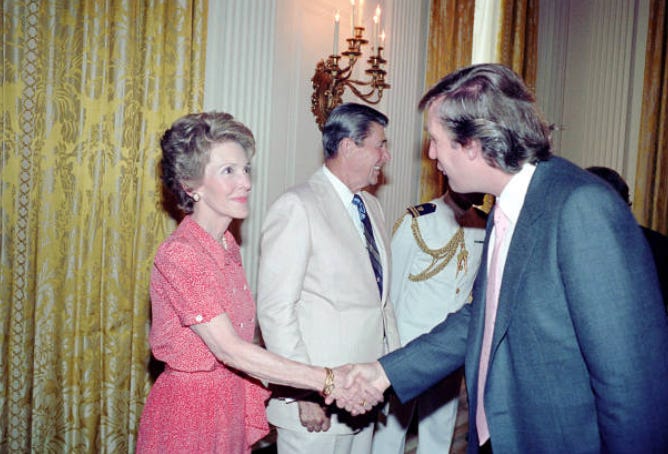
The biggest problem I see with Riley’s claim about impaling Trump with wooden stake is that there are no known time periods between 1981 and 1983 where Trump was temporarily disabled, such that Trump was unable to walk. I found photos of Donald Trump standing and in good spirits nearly every month from 1982 through 1985. I am missing some months but have not spent a lot of time searching. Trump was a well known-public figure in the early 80s.
In a hypothetical scenario where a person sustains a traumatic impalement, the medical consequences would be severe and life-threatening. Rectal impalement involves complex trauma. Trump’s colon could have been perforated. He could have suffered from internal organ damage depending on the angle and force. Riley could have penetrated Trump’s bladder, small intestine, or even his liver, diaphragm, or lungs. There would likely have been significant internal bleeding, nerve damage, and loss of mobility. Trump would have needed immediate surgery and hospitalization. A full recovery from that severe of an injury could take over a year.
There is no readily available evidence that Trump suffered such a severe injury in the early 1980s. Perhaps someone will locate it. If Riley’s allegations are true, it should be relatively easy to find witnesses close to Trump at the time who would know whether Trump was severely injured. We will see.
The Danger of Unvetted and Unverified Testimony
Voldeng frequently refers to the recordings as “testimony,” despite the fact that the interview was not conducted under penalty of perjury. Riley did not take an oath.
Voldeng’s conduct during the interviews has also drawn scrutiny. At one point, approximately 50 minutes into the first recording, Voldeng laughs and compares the alleged events of Riley kicking the wooden stake into Donald Trump to the Denzel Washington film The Equalizer.
This injection of levity and a pop-culture reference stands in stark contrast to the standard of care required when discussing sexual trauma with a victim.
Furthermore, Voldeng’s use of Latin phrases like “Veritas vincit” (truth conquers) and frequent biblical citations on her Substack post, where she revealed the recording of Riley, suggests that she is on a crusade-like political mission, rather than an objective investigation.
While every allegation of abuse deserves to be heard, they must be approached with extreme caution when they lack corroboration and are presented by uncertified intermediaries.
The primary concern is that Riley’s accounts—which feature significant chronological gaps and sensationalized details—could be used to muddy the waters. By associating high-profile figures with improbable scenarios, such reports risk undermining the efforts of other victims whose allegations are supported by credible, forensic evidence, and findings made by a jury.
Without corroboration, these recordings remain a cautionary tale of the dangers of “citizen journalism” in the sensitive arena of sexual abuse.
This is a general summary of the legal elements for proving defamation per se in California. (See CAJI 1700 et seq. on Defamation Per Se; See also Cal. Civ. Code § 43, 45, 45a, 46.) California has different requirements depending on whether the individual harmed by the defamation is a public figure, public figure for a limited person, or a private individual. Defamation is a state law and the requirements for proving it vary from state to state. Nothing is this blog is intended to be legal advice.
Hui v. Sturbaum (2014) 222 Cal.App.4th 1109, 1118. In California, an element of a defamation claim includes that the statement was not “privileged.” For example, there is a privilege to make claims in court without fear of being countersued for defamation.
Virginia Roberts Giuffre v. Alan Dershowitz (SDNY) Case No. 1:2019cv03377.
https://baptistnews.com/article/69-women-have-accused-trump-of-sexual-misconduct-but-hes-changed-the-definition/
Ivana Trump’s testimony was taken in her divorce case. She later provided the following statement to author Harry Hunt III, which is included in his book Lost Tycoon: The Many Lives of Donald Trump (1993): “[O]n one occasion during 1989, Mr. Trump and I had marital relations in which he behaved very differently toward me than he had during our marriage. As a woman, I felt violated, as the love and tenderness, which he normally exhibited towards me, was absent. I referred to this as a "rape", but I do not want my words to be interpreted in a literal or criminal sense.”
E Jean Carroll v. Donald Trump, U.S. District Court SDNY, Case No. 1:22-cv10016-LAK
Some sensible words on the subject, at last.
My sister was abused as a child, and her adult memories of the abuse were hugely contaminated by the fact that she sought help from an unqualified "therapist" who caused such significant damage that my sister ultimately committed suicide.
So, shame on those people calling us "paedophile protectors" for wanting not only to know the truth, but also to ensure that this victim, Sascha, is being treated correctly.
The guy said he would take a polygraph which apparently was valid enough to get people accused of leaking at the Pentagon fired. Let's have him take a polygraph. He also made these claims online in 2023 so his story has been consistent.