


As President Donald Trump directs the ongoing joint U.S.-Israeli military campaign against Iran, his critics and supporters alike are looking back at the origins of his “America First” doctrine.
The current conflict, which the administration says is aimed at dismantling Iran’s nuclear program and removing its leadership, follows years of escalating tension that many trace back to the very beginning of Trump’s political career.
While the world watches the strikes on Tehran and the fallout from the death of Supreme Leader Ali Khamenei, Trump’s disruptive and immature leadership remains as central to his presidency as it was to his first campaign.
In June 2015, Donald Trump descended his golden escalator at Trump Tower in New York City and delivered a speech announcing his candidacy for the Republican nomination.
The following month, Trump staged a campaign rally at the Phoenix Convention Center in Arizona. He claimed 15,000 people were in attendance, but the Phoenix Fire Department stated the crowd was only 4,200—the maximum capacity for the North Ballroom.
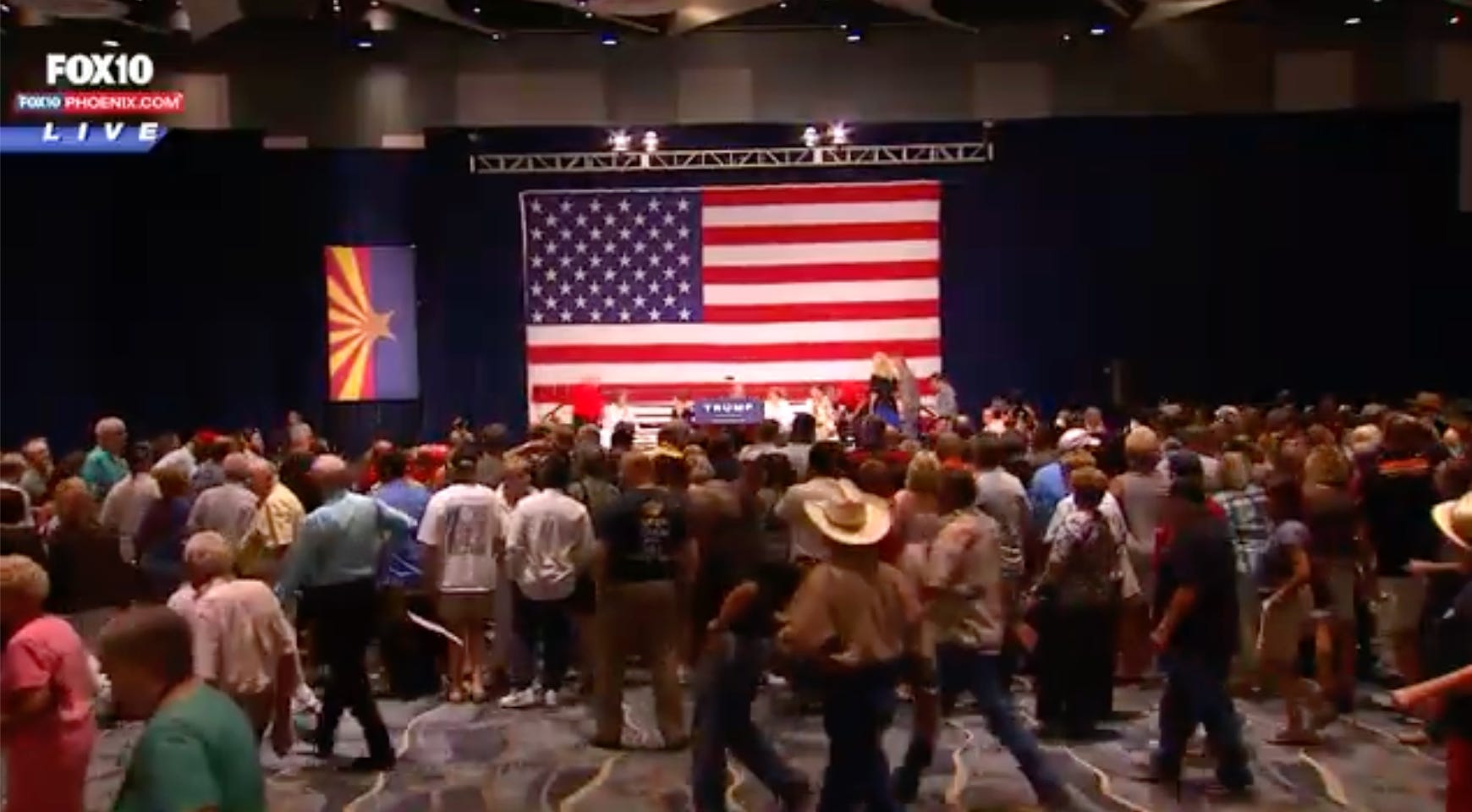
Trump opened by bragging that the crowd turned out because "the word is getting out that we have to stop illegal immigration. ... We have a situation that is absolutely out of control. We have incompetent politicians ... right here in your own state, you have John McCain."
Trump argued McCain lacked common sense and an understanding of current events. “Maybe it’s special interest, maybe it’s lobbyist, but for some reason some people don’t get it,” Trump said.
McCain, who was running for reelection to the Senate, responded by telling The New Yorker that Trump’s rhetoric had “fired up the crazies.”1 Trump retorted that McCain was a “dummy” and demanded an apology.
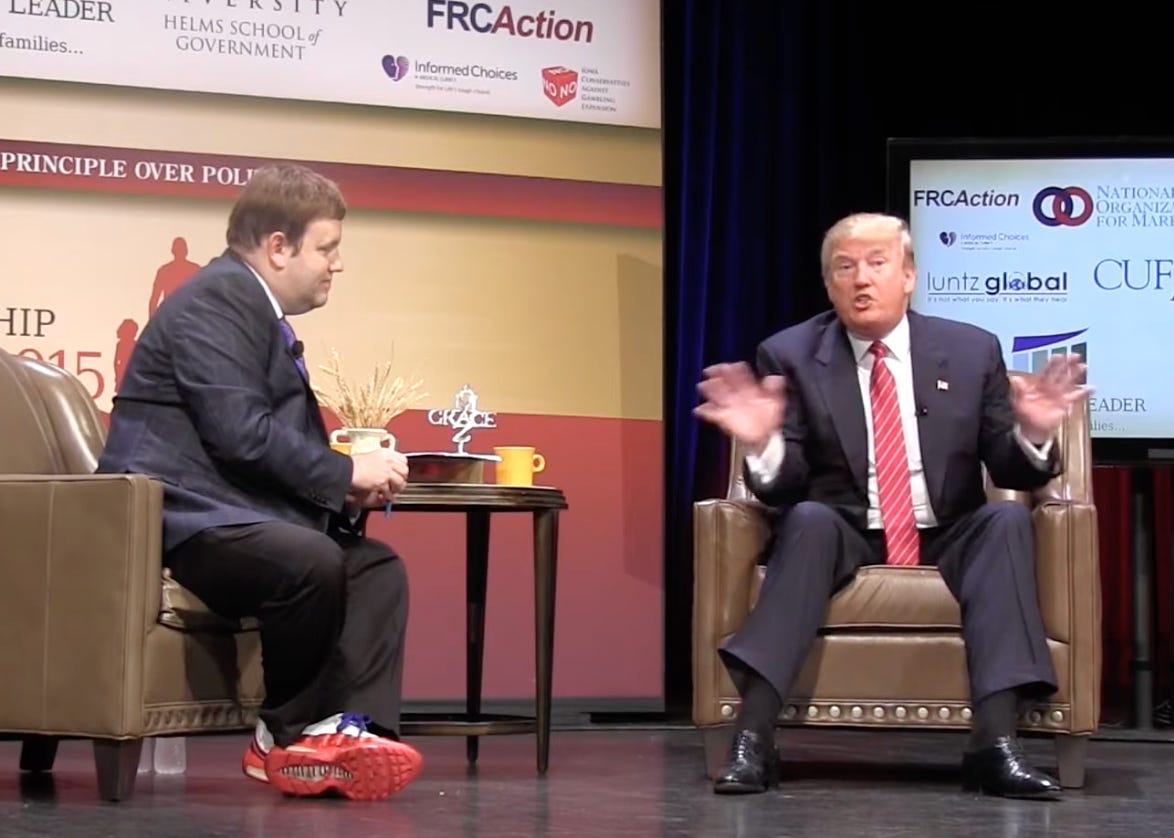
A week later, Trump appeared at a Q&A session at the Christian conservative Family Leadership Summit in Iowa. Republican strategist Frank Luntz questioned Trump: “Referring to John McCain, a war hero, five and a half years as a [prisoner of war] and you call him a ‘dummy’—is that appropriate in running for president?”
“He’s not a war hero,” Trump said. “He’s a war hero because he was captured. I like people who weren’t captured. Okay?”
Trump’s comments did not alienate his supporters, for whom “Make America Great Again” is not just a political preference but a part of their identity. When Trump is criticized, his followers perceive it as an attack on their core values, including lifestyle, community, and religion.
I posted this video on Instagram today and was surprised by how many people continue to defend and rationalize Trump’s comments. Understandably, Trump’s remaining followers have—for over a decade—invested their emotional energy, familial relationships, friendships, and reputations into supporting him. For those holding on, it is easier to blame others than simply let it go.
Ryan Lizza, John McCain Has a Few Things to Say About Donald Trump, THE NEW YORKER (July 16, 2015), https://www.newyorker.com/news/news-desk/john-mccain-has-a-few-things-to-say-about-donald-trump


