


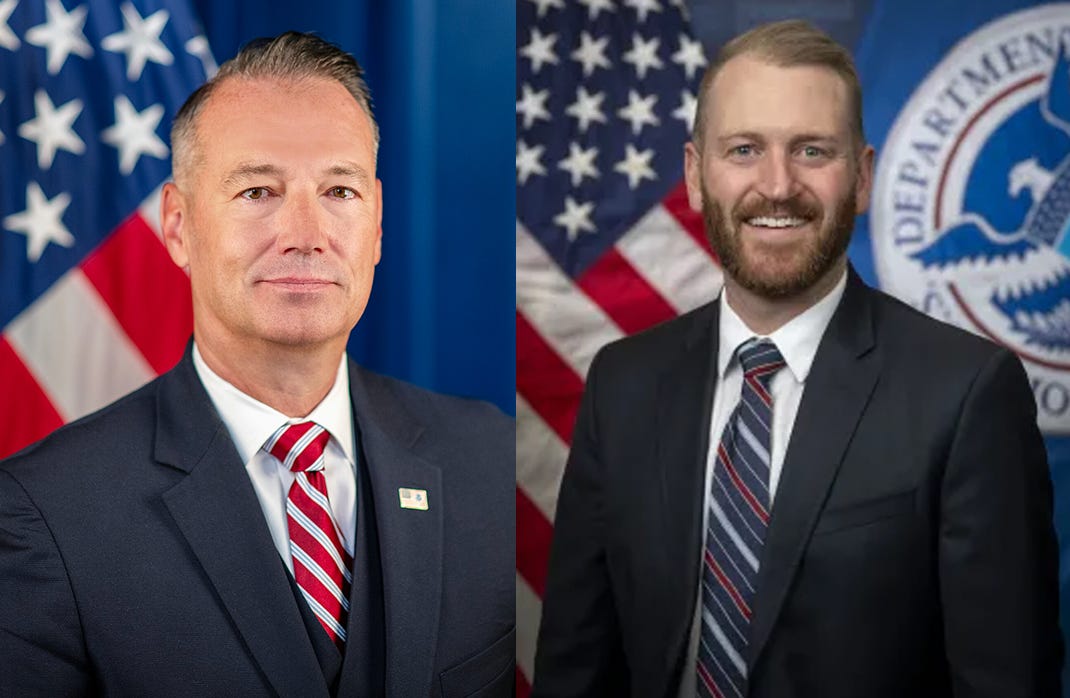
Whistleblowers have leaked an internal memo circulated by ICE Acting Director Todd Lyons, instructing agents that they may conduct searches of private residences without a judicial warrant. ICE’s policy is based on legal advice rendered by James H. Percival, General Counsel for the Department of Homeland Security (DHS).
The directive constitutes a flagrant violation of the Fourth Amendment, which strictly prohibits the government from entering or searching a home without a valid warrant issued by a neutral magistrate. While the U.S. Supreme Court has carved out narrow exceptions for warrantless searches—such as hot pursuit or immediate danger—none of those exceptions apply to the administrative arrests described in the Lyons memo.

The Origins of the Prohibition on Unreasonable Searches
The Fourth Amendment was drafted by James Madison and ratified in 1791 as a cornerstone of the Bill of Rights. It guarantees:
The right of the people to be secure in their persons, houses, papers, and effects, against unreasonable searches and seizures, shall not be violated, and no Warrants shall issue, but upon probable cause, supported by Oath or affirmation, and particularly describing the place to be searched, and the persons or things to be seized.
This amendment was the culmination of two centuries of English common law designed to check absolute monarchical power. In the landmark Semayne’s Case (1604), Sir Edward Coke famously declared that “the house of every one is to him as his castle and fortress, as well for his defence against injury and violence, as for his repose.” Coke argued that the King did not have unbridled authority to intrude upon a dwelling; entry was only permitted for lawful purposes after a warrant was obtained.
While England protected the “castles” of its citizens at home, it did not afford the same dignity to its American colonists. British tax collectors utilized “writs of assistance”—general warrants that gave officers near-unlimited authority to search any place at any time. In 1761, colonial merchants petitioned the courts to end these intrusive practices. They lost the legal battle, but a young John Adams was in the courtroom. He later described the argument against those warrantless searches as “the spark in which originated the American Revolution.”
Following independence, these protections were codified in the Virginia Declaration of Rights (1776) and the Massachusetts Constitution, before being refined into the Fourth Amendment. The intent was clear: to place an iron barrier between the state and the private sanctuary of the home.
Modern Application and the Secret Lyons ICE Memo
Under modern jurisprudence, a search of a residence is “per se unreasonable” if not authorized by a judicial warrant. While the Fourth Amendment was not applied to the states until 1961 (Mapp v. Ohio), its application to federal agents has been absolute since the founding.
Todd Lyons’ secret memo defies this history. It attempts to bypass the judiciary by instructing agents that they may enter a residence to conduct an administrative arrest provided they have a “Form I-205” (Warrant of Removal/Deportation). The memo argues that a final order of removal “establishes probable cause,” thereby granting agents the authority to “use necessary and reasonable force” to enter a home if admittance is refused.
However, the Supreme Court addressed this exact issue in Payton v. New York (1980). The Court held that the Fourth Amendment prohibits police from making a warrantless and nonconsensual entry into a suspect’s home to make a routine felony arrest. If a felony arrest warrant—signed by a judge—does not grant the police the right to break into a home without a separate search warrant or exigent circumstances, then an administrative form signed by an ICE official certainly does not.
Englands prohibition on unreasonable and warrantless searches and seizures did not apply to its American Colonies. The King’s officers had almost unlimited authority to search anywhere in the colonies at anytime. Tax collectors frequently conducted warrantless searches of homes in America to seize prohibited goods. By 1761 merchants had enough and petitioned the court to denounce British colonial practices. They lost. But John Adams was present in the courtroom. Adams viewed the warrantless searches as “the spark in which originated the American Revolution.”
The Virginia Declaration of Rights (1776) recognized the dangers and restricted government actors:
That general warrants, whereby any officer or messenger may be commanded to search suspected places without evidence of a fact committed, or to seize any person or persons not named, or whose offense is not particularly described and supported by evidence, are grievous and oppressive and ought not to be granted.
John Adams incorporated these requirements into the Massachusetts Declaration of Rights and added that all searches must be “reasonable.”
Every subject has a right to be secure from all unreasonable searches, and seizures of his person, his houses, his papers, and all his possessions. All warrants, therefore, are contrary to this right, if the cause or foundation of them be not previously supported by oath or affirmation; and if the order in the warrant to a civil officer, to make search in suspected places, or to arrest one or more suspected persons, or to seize their property, be not accompanied with a special designation of the persons or objects of search, arrest, or seizure: and no warrant ought to be issued but in cases, and with the formalities, prescribed by the laws. (Massachusetts Constitution, Article XIV.)
This language found its way into the Fourth Amendment. The purpose of the Bill of Rights, including the Fourth Amendment was to place clear limits on the government’s power. When the Constitution was proposed, Anti-Federalists demanded protections and limits to the government’s power. In response to their demands, James Madison drafted corrective proposals, including the Bill of Rights ratified in 1791.
In reality, the Fourth Amendment had little application in the 1800’s because federal criminal law was extremely limited. Crime was mostly codified by states. Things shifted by 1908 when the Bureau of Investigation (now FBI) was created.
The Fourth Amendment did not apply to state and local agencies until the Supreme Court held in 1961 that the Fourth Amendment applies to states under the Due Process Clause of the Fourteenth Amendment.
Modern Day Application of the Fourth Amendment
In general, a search of a person, their residence, or property, is unreasonable under the Fourth Amendment if the search is not authorized by a judicial search warrant. A search warrant is a written order signed by a judge that permits a law enforcement officer to search a particular person, place, or thing. There are some limited exceptions to this, such as a search incident to an arrest, exigent circumstances, emergencies, voluntary consent. These exceptions have little application when ICE agents searching one’s home, unless a person voluntarily consents to the search.
Todd Lyon’s Secret Memo Evidences an Illegal Pattern and Practice of Violating Constitutional Rights
ICE Director Todd Lyons’ secret memo instructing ICE officers they do not need a judicial warrant to search a person’s residence defies Fourth Amendment Jurisprudence. Lyons attempts to justify these illegal searches by relying on legal advice from DHS’ General Counsel James H. Percival.
Lyons’ leaked memo states: “ICE immigration officers may arrest and detain aliens . . . in their place of residence.” Lyons’ memo instructs ICE agents that prior to entering a residence to conduct an administrative immigration arrest, they “must ensure the Form I-205 is properly completed and is supported by an order of final removal. . . this is essential because that order establishes probable cause. . . Officers and Agents must have also have reason to believe that the subject alien resides at and is currently located in the address where the Form I-205 is to be served.”
Form I-205 is titled a “warrant of removal/deportation” that is typically signed by an immigration officer that calls for a person to be deported. Immigrations officers are not judicial officers. They work for an administrative agency.
Before entering a home without a judicial warrant, Lyons instructs ICE agents must:
Knock and announce;
Allow “those inside the residence a reasonable chance to act lawfully”; and
If an “alien” refuses admittance, ICE officers can use necessary and reasonable force to enter the alien’s residence.
However, the Supreme Court in Payton v. New York, 445 U.S. 573 (1980) held the Fourth Amendment prohibits the police from making a warrantless and nonconsensual entry into a suspect's home in order to make a routine felony arrest. The Supreme Court found that it was unconstitutional for police officers in New York to enter the residence of individuals who had felony arrest warrants, without first obtaining a judicial search warrant.
A judicial warrant to search a home requires an authorized law enforcement agent to apply to a judge to request that a specific property be searched. The application requires the officer to provide an affidavit showing facts that demonstrate probable cause to search the property.
By treating a Form I-205 as a skeleton key to the American home, the DHS and ICE are attempting to resurrect the general warrants and so-called “writs of assistance" that John Adams vehemently despised.
Should the Executive Branch continue to bypass judicial oversight, the 'castle' of private protections will dissolve into a radical commune. It is a striking irony: Trump’s path leads directly toward the anarcho-communism his base considers their greatest enemy.