


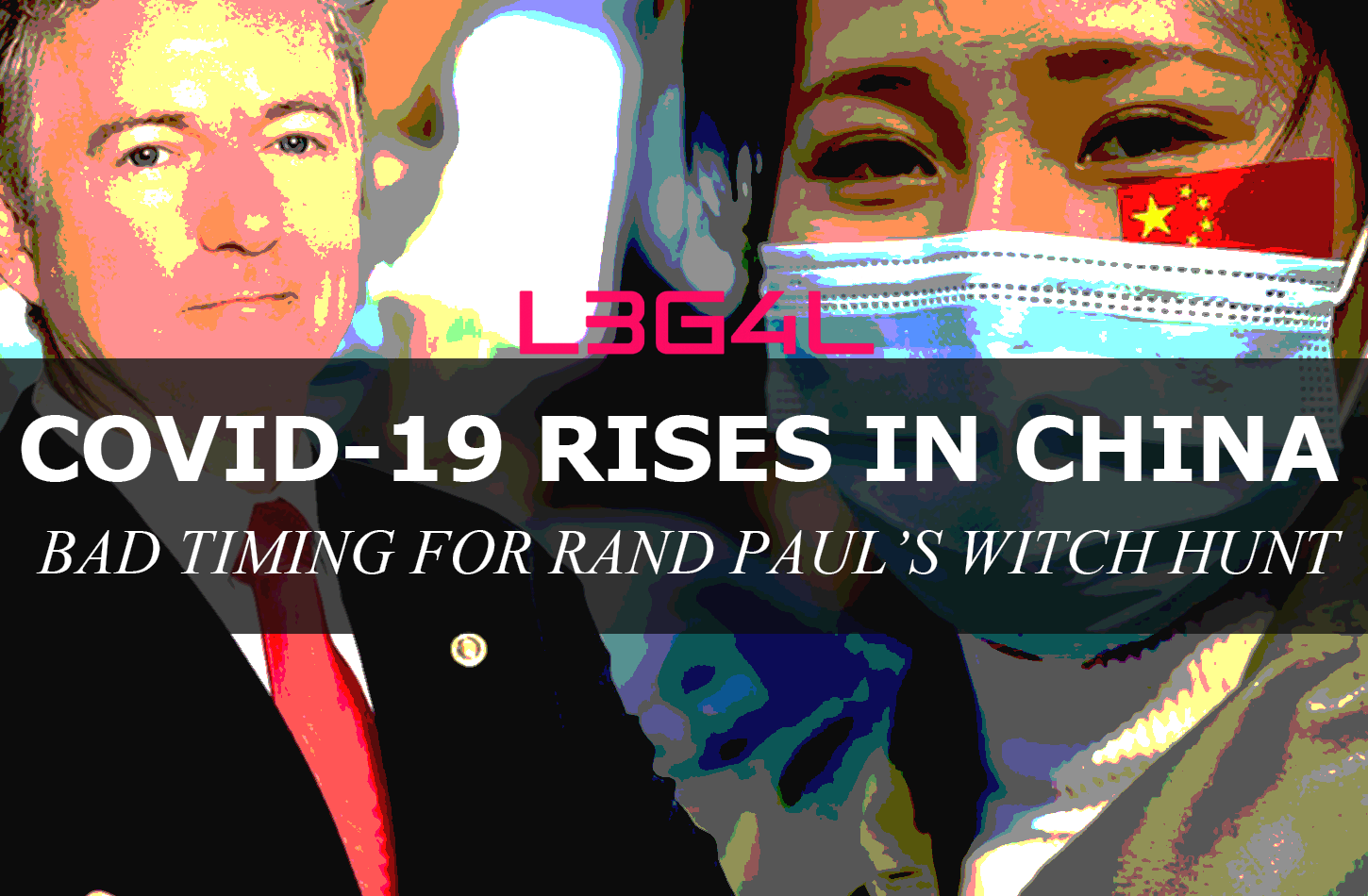
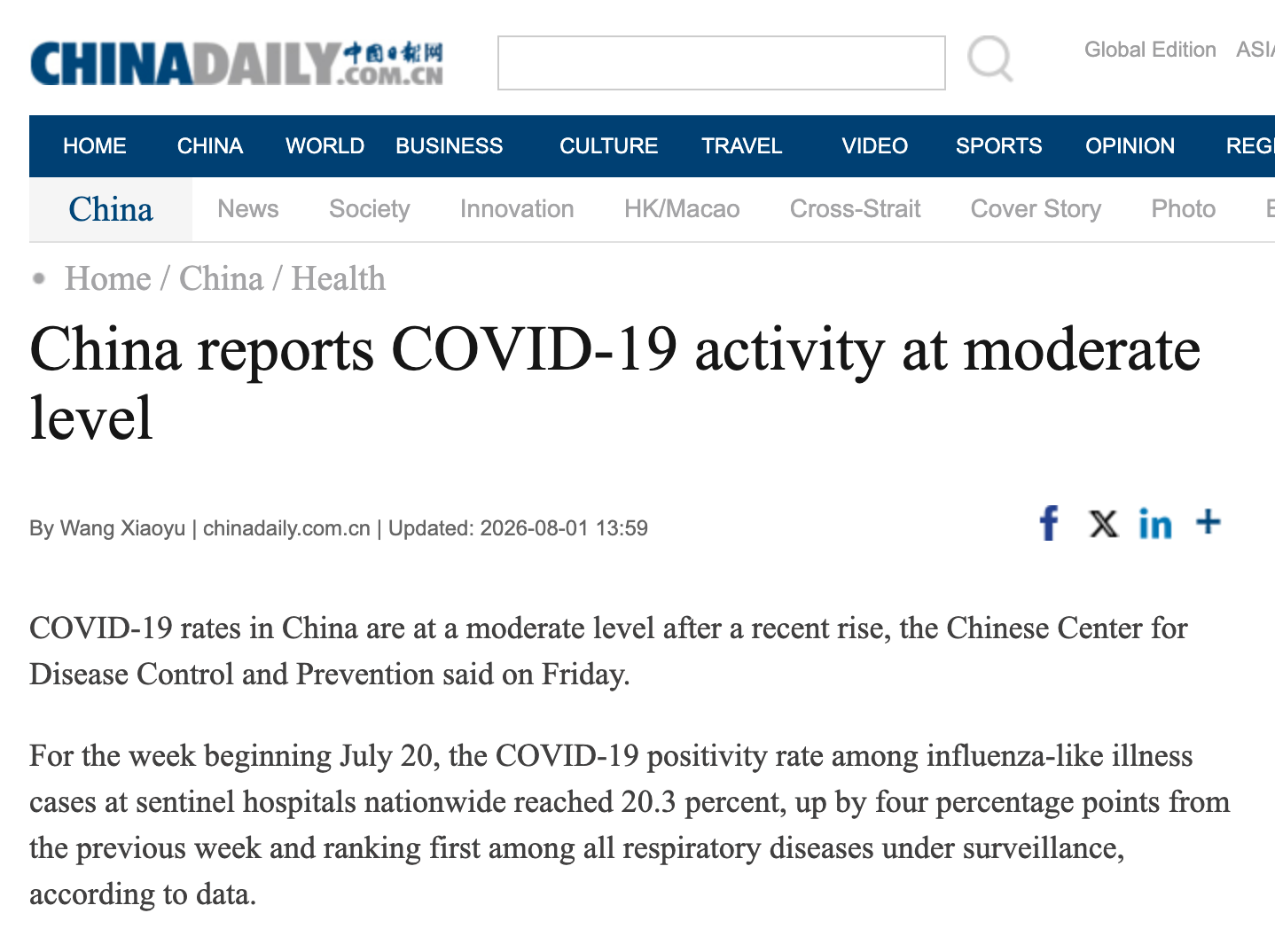
China’s Center for Disease Control (CCDC) noticed an increase in COVID-19 cases in late July 2026, and increased the alert level to “moderate prevalence.”1 The uptick has created problems for pharmacies unable to immediately fill prescriptions due to regulatory issues. Some hospitals report low supplies of only one medication. Domestic pharmaceutical manufacturers have activated emergency plans.
Difficulty of obtaining antivirals
In China, you must obtain a prescription for Covid-19 antiviral medications. But most in-store pharmacies are not authorized to sell them. The medications are typically obtained through hospitals or online platforms, which oftentimes come with red tape that makes immediate access impractical.
For infected patients, the main channel for obtaining medication is by visiting the hospital, testing positive on a nucleic acid or antigen test, receiving a prescription, and having it filled at the hospital’s pharmacy.
Alternatively, a patient can sign on to an e-commerce platform, upload their Covid-19 test results, consult with a physician, and obtain an electronic prescription, which is typically filled in 1-2 days. But according to Red Star News, the process can be delayed by regional transfers which “make immediate delivery impossible.” The delays can cause serious risks to patients who need the medications immediately.
Some community hospitals reportedly only have one medication (Mindevi) available in limited quantities.2 This is despite the fact that China has approved six domestically manufactured anti-Covid-19 drugs, plus imports including Pfizer’s Paxlovid (nirmatrelvir/ritonavir) and Merck’s Lagevrio (molnupiravir). In China, domestic antivirals cost around $50-100 USD, with imports ranging from $225-300 USD.
The increase in Covid-19 cases has caused several Chinese pharmaceutical companies to activate emergency plans. Demand is certainly on the rise, as the sale of Covid-19 antivirals in China has increased fourfold over the past month.3
Bad timing for Senator Rand Paul’s witch hunt
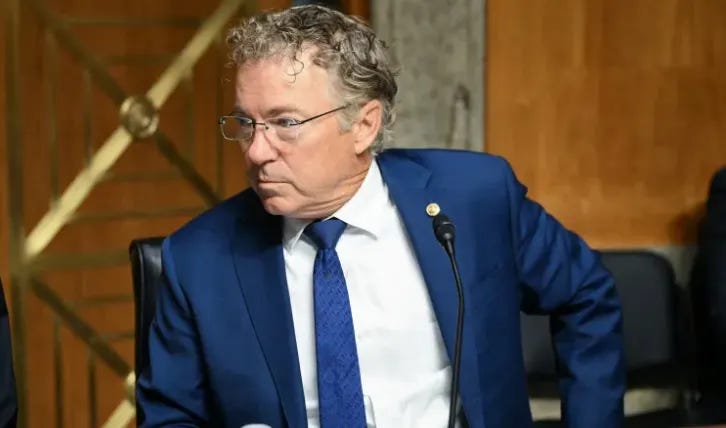
This month’s uptick in Covid-19 cases is incredibly bad timing for Senator Rand Paul (R-KY),4 who is on a quest to prove that the U.S. government, including Dr. Anthony Fauci covered up the origins of the Coronavirus. Throughout President Trump’s first term, Dr. Fauci served as the Director of the National Institute of Allergy and Infectious Diseases (NIAID).
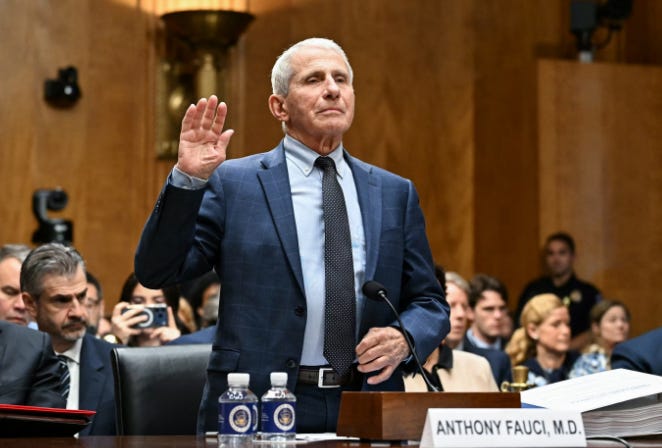
Paul issued a subpoena to Dr. Fauci, ordering him to appear to testify last Wednesday (July 29, 2026) before the Senate Homeland Security and Governmental Affairs Committee.
Paul claims the U.S. government funded “dangerous” gain-of-function research in China at the Wuhan Institute of Virology, which “may” have originated SARS-CoV-2.
Paul has pushed this theory for years at the expense of taxpayers. He accuses Dr. Fauci of destroying records and misleading lawmakers about whether the National Institutes of Health (NIH) funded such research.
Last Wednesday, Paul and his fellow Republicans grilled Dr. Fauci with pointed questions, which he refused to answer by asserting his Fifth Amendment right against self-incrimination.
Dr. Fauci claims that Senator Paul has an “unhinged obsession” with him, and that Paul is seeking vindication for his repeated statements that Dr. Fauci should end up “behind bars.”
Many people have spoken out against Paul and other Senate Republicans who continue targeting Dr. Fauci as a scapegoat for Covid-19, which has taken the lives of more than 7 million people worldwide.
Tomorrow, August 5, 2026, Paul intends to conduct contempt hearings against Dr. Fauci.
CCDC reports that the country has had similar periodic upticks over the past two years.
Source: Red Star Capital News, 8/4/2026
Source: Red Star Capital News, 8/4/2026
Senator Rand Paul was a licensed ophthalmologist in Kentucky for 17 years until he was elected to the U.S. Senate in 2010. Although Paul is a medical doctor himself, he has no known experience in infectious diseases. Paul specialized in cataract and glaucoma surgeries, LASIK procedures, and corneal transplants. Paul was sued twice for medical malpractice.
Zog will do zog like things..
Seems like a fake effort by China.