


Picture this: Oscar-winning actress Halle Berry, looking fierce as ever, takes the stage at the New York Times 2025 DealBook Summit. She’s not there to dish on her latest blockbuster—she’s railing against California Governor Gavin Newsom for vetoing Assembly Bill 432, the “Menopause Care Equity Act.”
Berry paints it as a betrayal of women everywhere, a slap in the face to those navigating the hot flashes, mood swings, and invisible struggles of perimenopause. “How dare he devalue women like this?” she fumes, positioning herself as the ultimate menopause warrior.
But hold on—let’s pump the brakes on this Hollywood hero narrative. Is Berry really the selfless advocate she’s cracked up to be, or is this just a savvy ploy to boost her status as an angel investor with a budding wellness empire?
Dig a little deeper, and it smells a lot like exploitation: using women’s very real pain to line her pockets through her startups, Respin Health, Inc.—it’s not even a California corporation. Oh and her other startup Re-spin LLC of California that sells an an “intimate wellness device” for $495 and 2 ounce bottles of lube for $60.
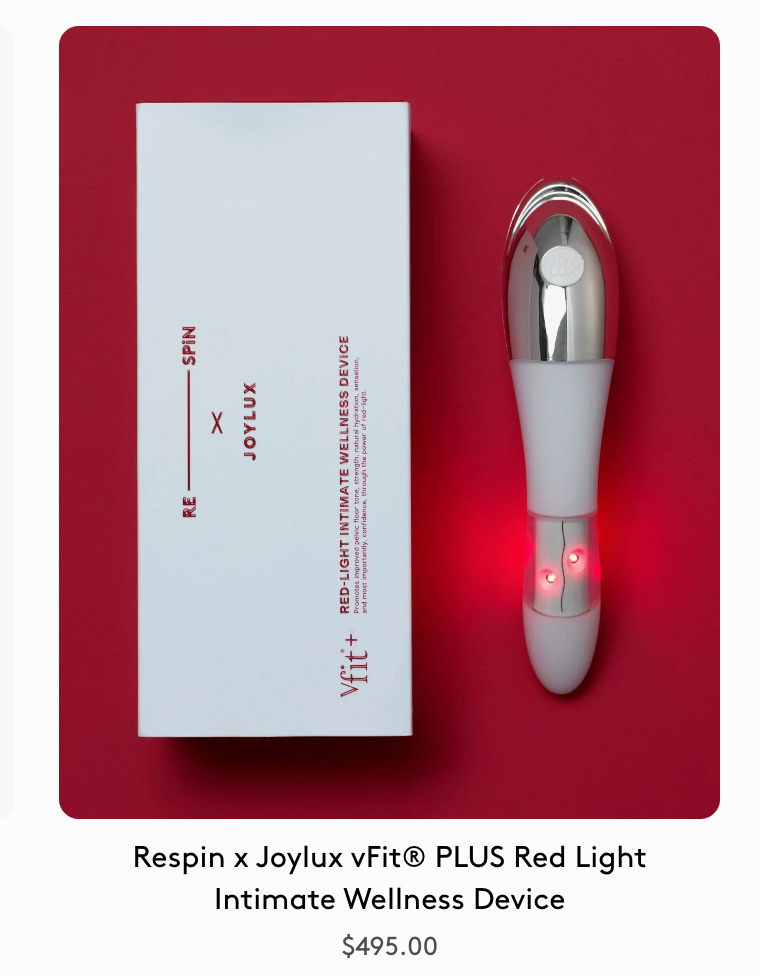
Photo of Repsin’s co-branded Joylux Red-Light “Intimate Wellness Device”

Berry’s Re-spin.com website advertises “the clinic is open” but the website expressly disclaims that they are not a substitute for professional medical or healthcare advice. What’s the difference between therapy guidance and healthcare advice?
Respin Health, Inc.: Berry’s Profitable “Solution” to Women’s Woes
How does this tie back to Berry’s wallet? In 2023, she co-founded Respin Health, Inc., a Delaware-based “wellness” startup that’s since pivoted hard into menopause. Respin bills itself as “Your 360 Menopause Care”—a holistic, data-driven platform promising relief from perimenopause to postmenopause. Sounds legit? Let’s peek under the hood.
Services Galore (For a Price): Personalized plans based on your symptoms, lifestyle tweaks for nutrition and sleep, access to FDA-approved meds like HRT, and 1:1 coaching from “menopause specialists.”
Pricing That Adds Up: Basic subscription? $20/month. Core plan? $40/month. Virtual visits with a “menopause-trained provider”? $55 a pop. Their 12-week “Respin Reset” program? Priced to “help you feel better fast.”
Re-Spin LLC, Berry’s Hormone Clinic and Intimate Shop: Vibes and Vibes Only?
Confusingly, Berry has another company re-spin LLC in California that uses the same branding as Respin Health, Inc. but on different website Re-spin.com. Re-Spin LLC advertises itself as a “clinic” that offers hormone therapy “guidance.” The website sells $499 vibrator and 2 ounce bottle of lube for $40 for “intimate wellness.” Talk about affordable care!
Respin Health Inc.’s liability disclaimer
What about the experts? Respin Health, Inc. boasts six medical leaders, but only two are actual MDs—and neither is licensed in California. The rest? Coaches and advisors peddling “certified” menopause wisdom. Their website’s disclaimer screams red flags: “Not a replacement for professional guidance from your primary care provider.” Translation: We’re here for your money, but don’t sue us if things go south.
Then there’s Respin.health’s terms of service— a liability shield fortress. Respin caps damages at $100 (or your last six months’ payments to them), whichever’s bigger. Did they lose all your sensitive health data? Did you receive medical advice that causes you to be severely injured? Did their $495 vibrator cause bodily injury? Tough Luck! Respin “shall not be liable” for anything. Here’s an excerpt from the Respin.health’s terms of service:
THE RESPIN ENTITIES SHALL NOT BE LIABLE FOR ANY INDIRECT, INCIDENTAL, SPECIAL, CONSEQUENTIAL, OR PUNITIVE DAMAGES, OR ANY LOSS OF PROFITS OR REVENUES, WHETHER INCURRED DIRECTLY OR INDIRECTLY, INCLUDING BUT NOT LIMITED TO ANY LOSS OF DATA, USE, GOOD-WILL, PROFITS, SERVICE INTERRUPTION, COMPUTER OR MOBILE DAMAGE, OR SYSTEM FAILURE, OR THE COST OF SUBSTITUTE PRODUCTS OR APPLICATIONS, OR FOR ANY DAMAGES FOR PERSONAL OR BODILY INJURY OR EMOTIONAL DISTRESS ARISING OUT OF OR IN CONNECTION WITH YOUR USE OR INABILITY TO USE THE PLATFORM, WHETHER BASED ON WARRANTY, CONTRACT, TORT (INCLUDING NEGLIGENCE), PRODUCT LIABILITY, OR ANY OTHER LEGAL THEORY, AND WHETHER OR NOT RESPIN HAS BEEN INFORMED OF THE POSSIBILITY OF SUCH DAMAGE, EVEN IF A LIMITED REMEDY SET FORTH IN THESE TERMS IS FOUND TO HAVE FAILED IN MEETING ITS ESSENTIAL PURPOSE.
Respin Health, Inc. claims on its website it is not a healthcare provider:
Respin does not offer or provide any medical advice, treatment recommendations, or pharmacy services.
Re-spin.com is another website with the same logos, branding, but a different terms of service that mentions “Respin, LLC.” In 2018, “Re-spin LLC” was registered in California. Berry is its managing member and CEO.
AB 432: A Well-Intentioned Bill or a Pharma-Friendly Giveaway?
At its core, AB 432 aimed to make menopause care more accessible by forcing health insurers to cover FDA-approved treatments—like hormone replacement therapy (HRT), nonhormonal meds for symptoms, and osteoporosis preventives—without the usual bureaucratic hurdles. No prior authorizations, no “fail-first” step therapy where you have to try cheaper options before getting what your doctor recommends.
Sounds empowering, right? Governor Newsom, a progressive Democrat no stranger to women’s rights, vetoed it anyway in October 2025. Why?

In his veto message, Newsom argued it could “unintentionally raise health care costs for millions of working women already stretched thin.” Without those cost controls (aka “utilization management”), premiums might creep up as insurers foot the bill for pricier treatments without question. Independent analyses backed this up: The California Health Benefits Review Program pegged the statewide hit at a “negligible” $2 million annually, but for CalPERS alone, premiums could jump by $3.2 million to $3.49 million. That’s real money trickling down to everyday folks—think an extra $0.18 to $0.48 per person per month, compounding in a state where healthcare affordability is already a crisis.
Proponents, including Berry, dismissed these as pennies, insisting the equity gains outweighed the costs. But here’s the skeptic’s lens: Who really wins big? Pharmaceutical giants pushing those FDA-approved drugs, for starters. Mandated coverage without gatekeeping means more prescriptions, more sales. And let’s not ignore the bill’s sneaky side effect...
The Gender Identity Twist: Covering Men for Menopause? Really?
Tucked into AB 432 is a clause mandating coverage “without discrimination on the basis of gender expression or identity.” Noble on paper—trans and nonbinary folks deserve care too—but in practice? It could force insurers to pay for men claiming perimenopause or menopause symptoms to access HRT, vaginal treatments, or osteoporosis meds. Imagine the chaos: A flood of claims from cisgender men, perhaps gaming the system for off-label uses like bodybuilding or anti-aging hacks.
And the litigation bomb? No one’s talking about it, but this could unleash a torrent of lawsuits under California’s Unruh Civil Rights Act, which bans discrimination in business services. Deny a man menopause treatment? Boom—lawsuit city against insurers and providers. The bill’s fiscal notes barely scratched this surface, estimating state costs at $504,000 annually rising, plus those premium hikes. But add court battles, and we’re talking millions more siphoned from public coffers. All while women’s actual needs get sidelined in the noise.
Berry’s timing is suspiciously perfect. AB 432 drops in February 2025; by July, Respin Health, Inc. of Delaware registered in California as an out-of-state corporation with a Texas office (and a Santa Monica address for good measure).
In September, Berry ramped up her Instagram blitz (@halleberry), urging fans to “turn up the heat” on Newsom to sign the bill, specifically calling out insurance coverage for HRT. Coincidence? Or calculated PR to drum up demand for her paid services?
The Bigger Picture: Exploitation Masquerading as Empowerment
Berry’s rebranded herself as a menopause maven—angel investor in women-owned biz, advocate for midlife health. But scratch the surface, and it’s clear: This is her “second act” as an entrepreneur.
If AB 432 passed, awareness skyrockets, demand for treatments surges—and who benefits? Pharma, sure, but also direct-to-consumer players like Respin Health, Inc. and Re-spin LLC, where women frustrated by insurance hassles (or inspired by Berry’s glamour) shell out privately.
Women deserve better than this: Real, affordable care, not a celebrity-fueled hype machine that preys on their suffering. Berry’s outrage? It rings hollow when her startup’s poised to profit. Governor Newsom got it right—vetoing a bill that could inflate costs without true equity. As for Berry, maybe it’s time she respins her focus from summit stages to genuine, non-profitable advocacy.
How about a bill that eliminates health insurance companies all together? In Q1 Anthem (now Elevance) profited over $2 billion. For doing what? Gambling on everyone’s needs for health care?